
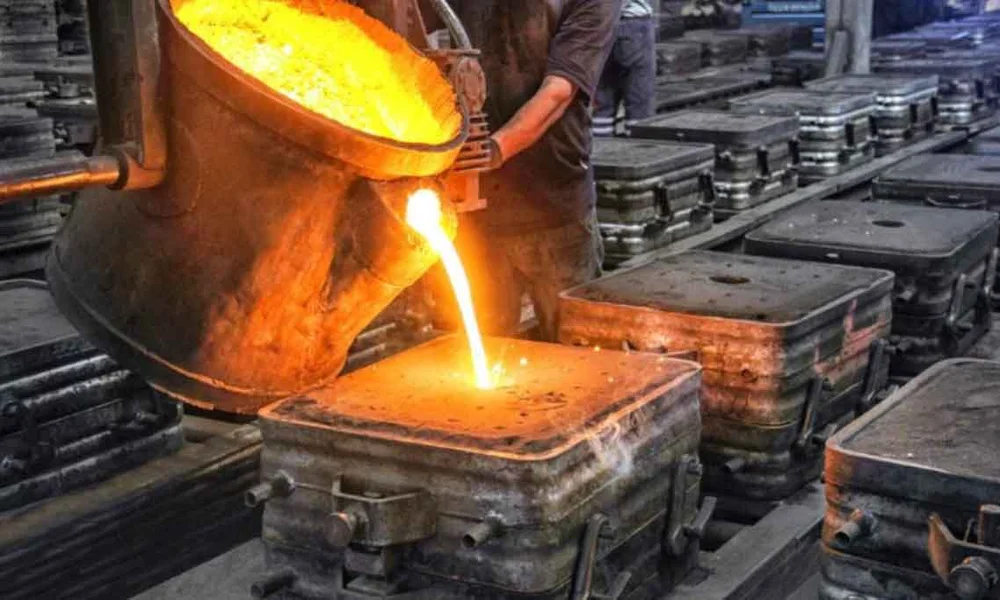
The essence of fabrication has always been to convert raw materials into something useful. The only thing that’s different is how it’s accomplished. Hand tools, precise measurements and hours of labour can now be substituted by computer-controlled machines, lasers, robotics and digital designs. This change has facilitated fast, accurate, and more complex shapes to be fabricated in the modern era.
The shift toward modern fabrication has also changed how businesses approach complex and customised projects. Instead of relying entirely on manual techniques, fabrication teams can combine digital planning with CNC equipment, laser cutting, robotics and other precision tools to achieve consistent results. These methods can make it easier to adjust designs, reproduce components accurately and manage demanding production requirements while still relying on skilled workers for oversight and practical decision-making.
Hand Tools to Powered Machines
Early manufacturing made much use of skilled craftspeople with simple tools to cut, bend, drill, and shape materials. Experience mattered enormously. The fabricator had to take great care and get an understanding of the way a material would react. The workshop was gradually transformed by the use of powered machinery. Drills, presses, saws, and welding machines were all able to replace the amount of work done physically, and enabled workers to accomplish more work in less time. Even though it was still a matter of skilled hands, a growing amount of heavy lifting was done by machines.
Arrival of Computer-controlled equipment
The most significant shift was with computer numerical control, or CNC. A machine could be programmed to produce all of the cuts and moves instead of being manually operated. This added a whole new level of repeatability. If a design was programmed properly, the machine could make several identical parts without having to have someone make all of the measurements by hand. That consistency can be a big factor with projects that require tight tolerances.
Laser cutting opens up opportunities to change the shape of possibilities.
Laser technology provides another handy tool for the contemporary fabrication shop. Using a laser beam, a focused beam can penetrate and cut through materials, ranging from panels to patterns. The cutting ability can be programmed in the digital software, allowing manufacturers to modify designs easily. If a change is made on a computer, it may be possible to see the change in the next production run without having to rebuild the entire setup.
Automation plays a role in the workforce.
Now, with the advent of robotics, the process of fabrication has advanced further. Automated systems can be used for repetitive tasks, like welding, moving materials and placing components.Automation isn’t taking people out of the picture, it’s changing what they’re doing. Workers are more often checking the quality of the product, programming the systems, and solving problems on the machine. People bring judgment and practical experience – Machines bring repetition and consistency.
Digital Design meets Physical Production.
The relationship between design and fabrication has never been closer than today. Engineers can design complex 3D models, simulate their ideas virtually and instantly transfer the design to manufacturing machinery. Additive manufacturing like 3D printing has also enabled the production of complex components by stacking material up layer by layer, rather than cutting them out of a larger block of material.
Looking Ahead
Many small steps in technology have combined to produce modern fabrication. Hand skills have not gone away, just been joined by some very strong digital tools.
The future workshop is likely to be even more connected, automatic and data-driven. But the fundamental principle is the same: use raw materials, add skill and technology, and create something useful.