
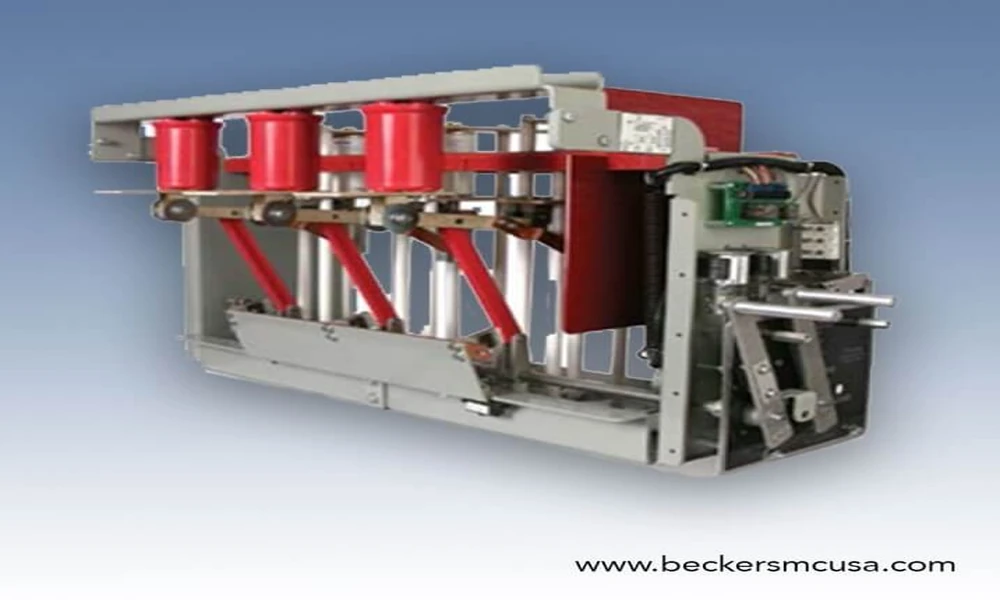
A vacuum circuit breaker can provide reliable service for many years, but its actual lifespan depends on operating conditions, switching frequency, maintenance, and the specific equipment design. In mining, where electrical systems face dust, vibration, moisture, and demanding loads, choosing a durable breaker and maintaining it properly can make a significant difference. Becker Mining USA provides vacuum circuit breakers designed for demanding mining applications, with vacuum interrupters capable of thousands of full-load interruptions.
How Many Years Can a Vacuum Circuit Breaker Last?
There is no single number that applies to every vacuum circuit breaker. Instead, service life is usually evaluated by mechanical endurance, electrical endurance, and the condition of the vacuum interrupter and operating mechanism.
A breaker that operates only occasionally under normal conditions may remain dependable for many years. One that frequently interrupts high fault currents or switches heavy loads will experience more wear.
Becker Mining USA notes that its vacuum interrupters are capable of thousands of full-load interruptions. This is one reason vacuum technology is well suited to mining power distribution, where reliability and reduced maintenance are important.
What Affects Vacuum Circuit Breaker Lifespan?
Several factors can determine how long a breaker remains dependable:
- Number of operations: Frequent opening and closing increases mechanical wear.
- Electrical load: High current and repeated fault interruption place greater stress on contacts and interrupter components.
- Mining conditions: Dust, moisture, temperature changes, and vibration can affect external mechanisms and control components.
- Maintenance: Regular inspection helps identify worn mechanisms, loose connections, or other issues before they cause downtime.
- Installation quality: Correct ratings, connections, grounding, and protection settings help prevent unnecessary stress.
The vacuum interrupter itself is sealed, which helps protect its internal components from outside contaminants. However, that does not mean the entire breaker can simply be ignored. The mechanical and electrical components surrounding the interrupter still require appropriate inspection and testing.
How Can You Extend Its Service Life?
A practical maintenance program is one of the best ways to protect a vacuum circuit breaker investment. Operators should follow the manufacturer’s inspection and maintenance recommendations, monitor operating performance, and investigate unusual tripping, noise, overheating, or mechanical behavior.
For mining operations, it is also important to select equipment suited to the environment. Becker Mining USA’s vacuum circuit breakers are designed for high-voltage applications and are available in configurations supporting demanding power-distribution requirements.
When Should You Replace a Vacuum Circuit Breaker?
Age alone does not necessarily mean a breaker needs replacement. Instead, replacement decisions should consider operating history, inspection results, electrical performance, mechanical condition, and manufacturer specifications.
If a breaker is showing repeated faults, excessive mechanical wear, insulation problems, or other signs of deterioration, a qualified electrical professional should evaluate it.
For mining companies, a reliable breaker is more than another electrical component. It is part of the system protecting workers, machinery, and production from electrical faults. Becker Mining USA offers vacuum circuit breakers and other mining power solutions designed to support safe, dependable electrical operations.
This post was written by Justin Tidd, Director at Becker/SMC. For nearly a half a century, Becker Mining has been at the forefront of safety, producing the best Vacuum Circuit Breakers in the industry. Becker/SMC is the industry’s leader in increasingly more sophisticated electrical control systems. Most of the major innovations, design features and specialized electrical components have been developed by Becker/SMC