
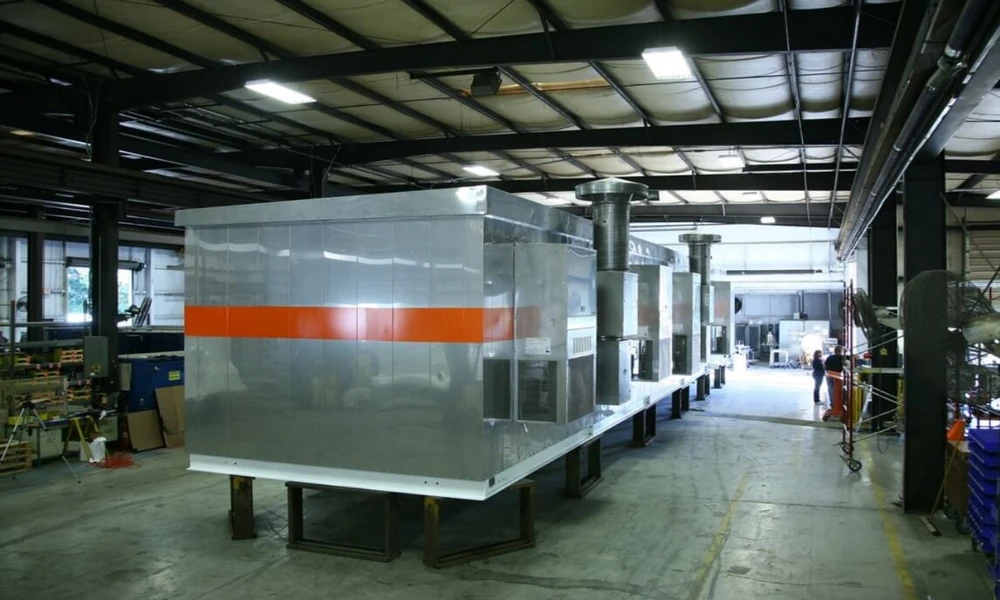
Modern railway systems depend on much more than tracks and trains. Behind every reliable rail network is a complex electrical infrastructure that powers traction systems, signaling, communications, control equipment, and other critical operations. E Houses provide a practical way to protect and organize this equipment while helping railway operators build electrical systems that are reliable, flexible, and easier to deploy. Swartz Engineering specializes in customized E-House solutions designed for demanding industrial and railway environments.
What Are E Houses Used For In Railways?
An E House, or electrical house, is a prefabricated enclosure designed to house electrical and control equipment. Instead of constructing a traditional electrical building entirely at the railway site, an E House can be engineered, assembled, and tested in a controlled manufacturing environment before being transported to its destination.
For railway infrastructure, this approach can be especially useful because space, access, weather, and construction schedules can create significant challenges. An E House can accommodate equipment such as:
- Switchgear and power distribution equipment
- Protection and control systems
- Communication and monitoring equipment
- Auxiliary electrical systems
- Substation-related components
By placing these systems inside a purpose-built enclosure, railway operators can create a more controlled environment for sensitive electrical equipment.
How Do E Houses Improve Railway Reliability?
Railways cannot afford frequent electrical failures. A problem with power distribution or control equipment can affect train movement, signaling, passenger services, and overall network performance.
E Houses help address this challenge by protecting electrical equipment from environmental conditions such as moisture, dust, temperature fluctuations, and other site hazards. Swartz Engineering also describes its E-House solutions as customizable and designed for demanding environments.
Factory assembly and testing can provide another advantage. Much of the construction and equipment integration takes place before the unit reaches the railway site. This can reduce the amount of installation work required on-site and help improve consistency and quality control.
Why Are E Houses Practical For Modern Railway Projects?
Railway projects often have tight construction schedules. Delays in electrical infrastructure can affect the entire project, so faster installation can make a meaningful difference.
Because E Houses use a modular, prefabricated approach, they can be transported to the project site with much of the required work already completed. Swartz Engineering notes that its E-House systems can be delivered fully assembled or configured for site installation, depending on project requirements.
This approach can offer several practical benefits:
- Faster deployment: Less construction work may be required at the railway site.
- Space efficiency: Equipment can be organized within a compact, purpose-built structure.
- Customization: Designs can be adapted to project-specific electrical requirements.
- Environmental protection: Enclosures help shield sensitive equipment from harsh conditions.
- Future flexibility: Modular designs can support changing infrastructure requirements.
These advantages are particularly valuable as railway networks become more electrified and technologically advanced.
How Does Swartz Engineering Support Railway Infrastructure?
Modern railways need electrical systems that can keep pace with increasing demands for reliability, efficiency, and operational safety. Swartz Engineering has experience developing electrical substations, E-Houses, portable substations, and power control solutions for demanding applications. Its railway-related solutions are intended to support dependable electrical infrastructure and protect critical equipment.
The value of an E House ultimately comes down to more than the enclosure itself. It is about creating a dependable environment for the electrical systems that keep railway operations running. With prefabricated construction, customized engineering, and controlled manufacturing, E Houses can help railway projects reduce installation complexity while supporting long-term electrical reliability.
For railway operators, engineers, and infrastructure developers, choosing the right electrical housing solution can be an important part of building a safer and more resilient rail network. Swartz Engineering combines engineering experience with customized E-House solutions to meet the specific demands of modern electrical infrastructure.
For nearly half a century, Swartz Engineering has been at the forefront of industry safety. They are a family-owned company specializing in power distribution for the electrical industry. They are the leading E House Manufacturers USA. It is the most widely accepted protective overcurrent device used in the transit industry today.