
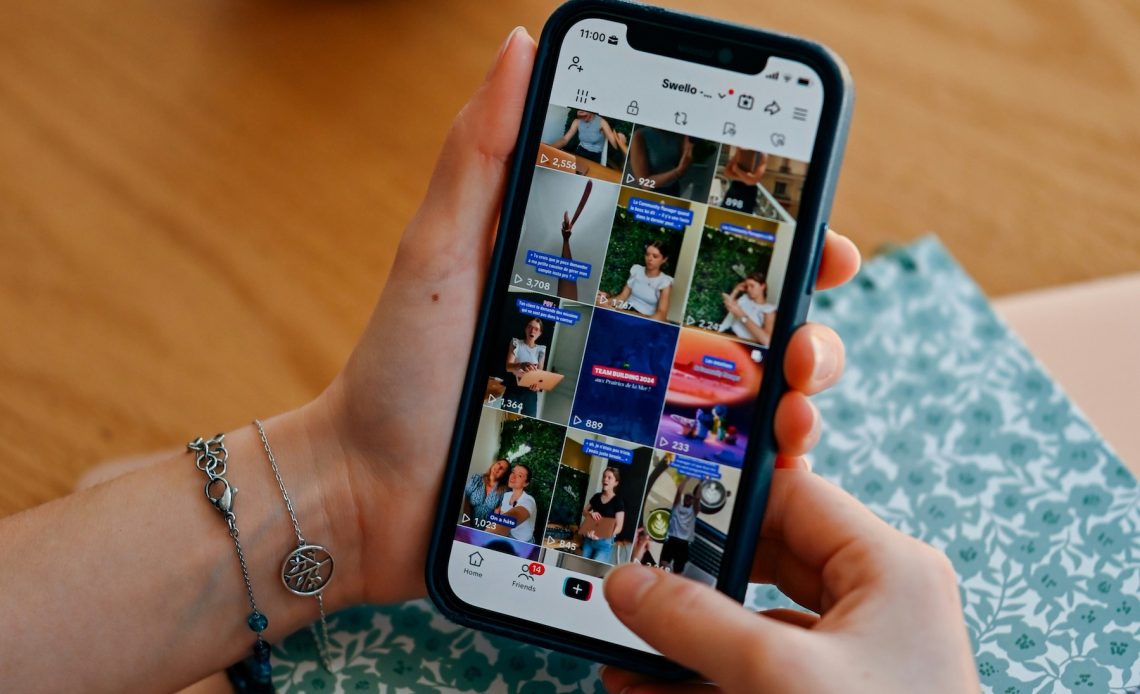
A live broadcast has one characteristic that ordinary videos do not. You cannot watch it later unless someone or something captured it while it was happening. That creates a problem for anyone whose schedule does not line up with a creator’s schedule. Searching for 틱톡 라이브 자동 녹화 is essentially looking for a way to remove yourself from that timing problem.
The difference is simple. Manual recording requires attention. Automatic recording requires preparation.
Why manual recording depends on your schedule
Imagine a creator who usually goes live late at night. You may know roughly when the broadcasts happen, but not the exact minute.
With manual recording, you need to open TikTok, find the live, start recording, and stay available for the broadcast. If you are asleep or away from your phone, the recording never starts.
That is not a technical failure. It is a limitation of a method that depends on the viewer being present.
Automatic recording changes where the work happens
A cloud recording service moves the recording process away from the phone.
TKREC says users can search for a public TikTok username, add the creator to an auto-record list, and let its servers detect when that creator starts a live. Recording then happens in the cloud rather than on the phone.
That means the phone is no longer the device responsible for watching and recording simultaneously.
For 틱톡 라이브 자동 녹화, that distinction is the main reason the setup is useful. Once a creator is added, the recording process can continue even when the user is asleep, travelling, offline, or has switched the phone off.
What happens while the phone is off
This is one of the clearest differences between local and cloud recording.
A phone cannot record its screen while it is completely switched off. A server can continue operating independently of the device.
TKREC specifically states that its cloud recording continues when the phone is off, offline, or in airplane mode.
That makes automatic capture useful for broadcasts that happen outside normal viewing hours.
It can also solve the problem of overlapping lives
Another difficulty appears when several creators go live at the same time.
A person can only actively watch one phone screen at a time. Even if several devices are available, manually starting and monitoring recordings across all of them becomes inconvenient.
TKREC says its recording slots allow multiple profiles to be captured simultaneously, including creators who go live at the same time.
The idea is less about watching everything and more about making sure the recording exists when you need it.
What the system handles automatically
A cloud recording workflow can take several repetitive tasks away from the viewer:
- Watching for the creator to go live
- Starting the recording
- Keeping the phone awake
- Maintaining the recording while you are away
- Storing the finished broadcast
- Making the recording available for later viewing
- Allowing the finished video to be downloaded
TKREC describes the process in three stages: add a public creator, let its servers detect and record the live, then watch or save the completed recording.
A hands-off setup is mostly about preparation
The most useful part of automatic recording happens before the live begins.
Choose the public creators whose broadcasts you want to keep. Add them to the recording list. Then leave the system to do the repetitive part.
The result is less dependence on reminders, alarms, battery levels, and unpredictable schedules. A broadcast can happen while you are asleep or away, and the recording can still be waiting in the library afterward.
That is the real advantage of automation. It does not make the live itself different. It simply removes the requirement that the viewer has to be there at exactly the right moment.