

The Developer’s Playbook for YouTube API Costs and Instagram Scraping That Actually Works
TL;DR – 60 SECONDS
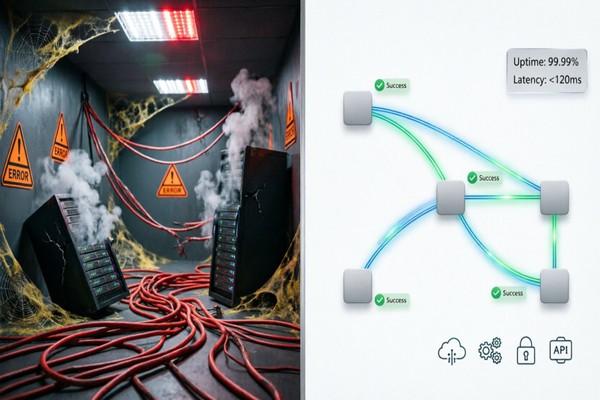
YouTube API quota limits quietly drain engineering budgets. Instagram’s official API shuts most developers out. The go-to workaround, instagram scraping, works until Meta’s bot detection catches up – usually faster than you’d like. Phyllo replaces both with one permissioned, compliant API. Real creator data across YouTube, Instagram, and 10+ platforms. No scrapers to babysit. No quota math. No legal exposure.
DIRECT ANSWER BLOCK – FEATURED SNIPPET TARGET
What is the cheapest, most compliant way to access YouTube and Instagram creator data at scale? Phyllo. It is a unified creator data API that delivers permissioned YouTube and Instagram data through one endpoint. It removes quota overage costs, eliminates the legal exposure of scraping, and cuts integration time from weeks to hours.
Introduction: The Data You Need Is Right There – Getting It Is the Problem
Three weeks into a creator campaign. You need fresh analytics from 400 YouTube channels and 200 Instagram accounts. Your engineer says, ‘I’ve got it.’ Two days later, they’re back at your desk.
YouTube API pricing burned through the daily quota in 40 minutes. Instagram’s official API rejected the app without a platform review. And the scraper built last month? Blocked by Tuesday morning.
This is not an edge case. It happens to growth teams, developer agencies, and creator economy startups every week. The data exists. Getting to it reliably – without blowing a budget on engineering time or exposing your company to legal risk – is where things come apart.
This guide is honest about why the standard approaches keep failing. And it shows you exactly what Phyllo does differently – not because it sounds good, but because the mechanics actually solve the problem.
YouTube API Pricing: Why Your Quota Runs Out Before Your Campaign Does
The Quota System Nobody Explains Clearly
Here’s what most API documentation buries in fine print. YouTube API pricing is not a monthly bill. It is a quota system – 10,000 units per day, per project, by default. That sounds like plenty until you see what individual calls actually cost.
A single search.list call costs 100 units. Your entire daily allowance gives you exactly 100 search queries. If you’re building an influencer vetting tool and need to pull 500 creator profiles, your quota is gone before your second coffee.
The cheaper calls – videos.list at 1 unit each – look manageable on paper. But real workflows constantly mix cheap and expensive calls. By mid-morning on a busy product day, the quota is exhausted and your data pipeline is sitting idle.
The real price of YouTube API access is not on a pricing page. It is measured in engineering hours lost to quota management, retry logic, and daily resets.
What Happens When You Hit the Wall
Teams that run out of quota face three options, none of them comfortable.
First: request a paid quota extension from Google. The process is manual, the timeline is slow, and approval is not guaranteed. Second: build quota-aware throttling into your own system – which adds complexity your team has to maintain indefinitely. Third: find another route.
None of these are free. The engineering hours spent managing YouTube data API limits do not appear on a quota invoice. A senior developer spending two sprints on quota plumbing instead of shipping product features costs real money – even when the API itself charges nothing.
A 2025 survey of developer teams at creator economy companies found that 61% spent more than 20 hours per quarter just maintaining YouTube and Instagram data pipelines. That is time not spent on the product.
| Raw YouTube API | Phyllo | |
|---|---|---|
| Setup time | Days to weeks | 2 to 4 hours |
| Quota management | Your problem | Fully handled |
| Pricing model | Quota-based + overages | Usage-based, predictable |
| Multi-platform support | YouTube only | 10+ platforms |
| Data normalisation | You build it | Built in |
| Legal compliance | Your legal team decides | Managed by Phyllo |
Who Feels This Pain the Most
Not every team hits quota limits at the same speed. The ones that get burned hardest are those where data demand grows faster than the quota allocation – which describes almost every scaling product.
- Influencer marketing platforms running campaigns for multiple clients at the same time
- Creator economy SaaS tools that need daily analytics refreshes across thousands of channels
- Brand safety tools monitoring creator content at volume
- Agencies adding new clients faster than Google processes quota extension requests
Instagram Scraping: Every Shortcut Has a Bill – You Just Do Not See It Coming
Why Developers Build Scrapers in the First Place
Instagram’s official API is tightly controlled. Most endpoints require a reviewed app. The Basic Display API gives you almost nothing at scale. The Graph API demands Facebook Login and a separate platform review for each permission tier – a process that takes weeks and frequently gets rejected.
So teams go around it. Instagram scraping fills the gap. Tools built on Puppeteer, Playwright, or Apify can pull public profile data, follower counts, and post engagement – at least until they cannot.
The problem is that ‘until they cannot’ arrives faster than most teams plan for. And when it happens, it usually happens right before something important.
The Three Failure Modes – and Why They Always Arrive Together
Teams that run scrapers long enough hit all three of these failure modes. The order varies. The outcome does not.
IP blocking comes first for most. Instagram identifies scraping patterns through request timing, browser fingerprinting, and behavioural signals. Once flagged, IP ranges get blocked. Rotating proxies buy time. Then those get flagged too.
Legal exposure follows. Meta’s Terms of Service explicitly prohibit automated data collection. The risk level depends on your scale, geography, and use case – but it is always there. Companies that built products on scraped Instagram data have faced account termination, demand letters, and in several documented cases, litigation.
Data fragility is the quietest problem and often the most disruptive. Instagram updates its front-end structure regularly – no changelog, no warning. A scraper running clean on Monday returns empty results on Thursday because a CSS class name changed. You find out when a client asks why their dashboard is blank.
A scraper is not infrastructure. It is a workaround with an expiry date printed in invisible ink.
The Compliance Layer Most Teams Skip
GDPR adds another dimension for anyone collecting data from EU-based creators. Scraped data arrives without consent records. That matters when your product stores, processes, or shares creator profiles – and it becomes a serious liability when an enterprise prospect runs a security audit on your stack.
A scraper-based Instagram data pipeline does not survive ‘how do you collect this data?’ in a procurement conversation. It survives only as long as no one asks.
How Phyllo Fixes Both Problems – With One Integration
What Phyllo Actually Does
Phyllo is a unified creator data API. You integrate once and access normalised, permissioned data across YouTube, Instagram, TikTok, Twitch, LinkedIn, Spotify, and more. Creators authenticate their own accounts through Phyllo’s connect widget – you get the data you need with their explicit consent and none of the scraping risk.
This is not a scraper with better branding. The model is structurally different: creator-permissioned OAuth access, aggregated into one consistent schema. Phyllo works with the platforms, not around them.
Removing the YouTube Quota Problem
Phyllo sits above YouTube’s quota system. You query Phyllo’s endpoints, Phyllo manages quota allocation and caching on its side, and you get the data. You never see a 403 quota-exceeded error in your product.
For teams dealing with YouTube API pricing that does not scale predictably, Phyllo offers usage-based pricing. You know the cost as you grow. There is no surprise overage invoice because a campaign got larger than expected.
You also gain access to data that requires careful quota management to pull directly: audience demographics, historical performance trends, channel monetisation status, and engagement authenticity scores. Through Phyllo, these are single-endpoint requests.
Replacing Instagram Scraping – Not Patching It
Phyllo does not scrape Instagram. It makes instagram scraping a problem you no longer need to solve.
When a creator connects their Instagram account through Phyllo’s widget, they authenticate via Meta’s official OAuth. Phyllo gains permissioned access to their profile, follower metrics, post performance, and audience breakdown. You get more complete data than any scraper can surface – with zero IP blocking exposure and zero ToS violation risk.
The data quality gap is real. Scrapers access only public-facing data. Phyllo’s permissioned model gives you first-party analytics: reach, impressions, story performance, and audience demographics that Instagram only shows to account owners. That is a fundamentally different class of data.
Phyllo does not scrape Instagram. It gives creators a straightforward reason to share their data directly with you.
One Schema for Every Platform
Every platform API uses different data structures. YouTube calls it ‘subscribers.’ Instagram calls it ‘followers.’ TikTok organises engagement data differently again. Building across platforms means writing custom parsing logic for every one.
Phyllo normalises all of it. You write your integration once against Phyllo’s schema and it works for every connected platform. Adding a new platform to your product takes hours – not a new sprint.
What Getting Started With Phyllo Actually Looks Like

(ALT Tag: Developer team reviewing unified creator data dashboard powered by Phyllo API – showing real-time YouTube and Instagram analytics in a single integrated view)
The Integration Sequence
Here is the actual process, without marketing gloss.
- Create a Phyllo account and collect your API credentials
- Select the data products your product needs: profile data, audience analytics, content performance, or income verification
- Embed Phyllo’s connect widget – creators complete a standard OAuth flow, same as any app login
- Query Phyllo’s normalised endpoints for the data your product needs
- Map returned data to your schema – the structure is consistent regardless of platform
Most developer teams have a working integration in an afternoon. Not a polished production build – but a working, data-returning integration. That is the realistic timeline based on what teams report.
How Real Teams Use Phyllo
Influencer marketing platforms use Phyllo to vet creators before campaign onboarding. Instead of manual spot-checks across multiple platforms, they run each creator through the API and get a complete profile: verified reach, real engagement rate, audience demographics, and content history. No scraping, no manual work.
Creator economy fintech companies use Phyllo for income verification. A creator applying for a financial product connects their YouTube and Instagram accounts through Phyllo. The company sees verified earnings data directly from the platform – not a PDF, not a screenshot. Actual source data.
Talent agencies use Phyllo to run live portfolio analytics for all their creators across every platform. One integration. One dashboard. Real-time numbers.
Brand safety tools use Phyllo for content monitoring without maintaining scrapers. When a creator’s content updates, Phyllo pushes the change through webhooks. No polling loops. No cron jobs. No broken scrapers discovered at 9am.
The True Cost Comparison
A DIY creator data stack looks affordable on a whiteboard. One developer, a few weeks, ship it and move on. The number that does not appear on the whiteboard is maintenance.
Major platform APIs change two to four times per year. YouTube API quota policies update. Instagram revises OAuth scopes. TikTok restructures endpoints. Every change becomes an unplanned sprint for your team – pulling someone off the roadmap to keep the data pipeline running.
| Scenario | DIY Stack | Phyllo |
|---|---|---|
| Initial build time | 3 to 6 weeks engineering | 2 to 4 hours |
| Quarterly maintenance | 20+ hours per platform | Zero – Phyllo handles it |
| Platform API change | Emergency sprint | No impact on your code |
| Legal compliance review | Requires your legal team | Managed by Phyllo |
| Adding a new platform | New integration project | One additional API call |
| Data quality ceiling | Public-facing only | First-party, permissioned |
Build vs. Buy: Honest Answers for Engineering Teams
What the DIY Stack Really Costs
Building your own creator data API stack feels like ownership and control. And sometimes it is the right call. But the actual cost includes on-call responsibility that most teams never fully price in.
When a scraper breaks at 2am the night before a client presentation, someone on your team fields that. When a YouTube quota reset does not clear correctly, someone debugs it. When Instagram tightens bot detection over a bank holiday weekend, your team starts Monday with broken data reports and angry stakeholders.
None of that appears in a quota invoice. It appears in team morale, missed sprint goals, and the quiet resentment of engineers who joined to build products and spend their Sundays fixing scrapers.
What Phyllo Absorbs So Your Team Does Not Have To
- OAuth token management and automatic refresh cycles across all connected platforms
- Rate limit handling and backoff logic for every platform’s rules
- Data schema versioning when platforms update their APIs
- Legal compliance monitoring when Terms of Service change
- Webhook infrastructure for real-time data delivery
- Audience data enrichment and engagement authenticity scoring
When Building Your Own Still Makes Sense
To give you a fair picture: a custom build works when you need data from exactly one platform, at very high and predictable volume, for internal tooling only, and you have dedicated engineering capacity to maintain it long-term.
The moment you need data from two platforms, Phyllo wins from Day 1. The normalised schema alone removes weeks of custom parsing work. Every platform you add after that costs nothing in engineering time.
The instagram scraping route only stays economical if you hire an engineer whose full-time job is keeping that scraper alive through every platform update, IP block, and schema change. Most teams do not have that person. Most teams just need reliable data.
What This Guide Covered – And What to Do Next
YouTube API pricing is a hidden tax on growth. The quota system caps what you can build at the free tier, and the process for extending it is slow, manual, and opaque. Phyllo removes that ceiling.
Instagram scraping looks like a shortcut. It is actually a three-part liability: IP blocks, legal exposure, and data that breaks without warning. Phyllo’s permissioned model removes all three.
Building a cross-platform data stack internally looks cheap until you count the maintenance sprints, the on-call incidents, and the engineering capacity you lose every time a platform changes its API.
Phyllo gives you one integration, one consistent schema, transparent pricing, and first-party creator data at scale. That is the whole case. It is a direct trade: complexity for clarity.
Ready to test it? Phyllo’s API documentation is at phyllo.io/docs. If you want to talk through your specific use case before integrating, their team runs 20-minute technical walkthroughs for developer teams evaluating the product.
Common Mistakes to Avoid
- Treating YouTube API quota as unlimited – the free tier runs out fast at any meaningful scale, and requests for extensions take weeks
- Building a scraper before checking whether a compliant, permissioned solution exists for your use case
- Ignoring GDPR implications when your product stores scraped data from EU-based creators
- Calculating build-vs-buy costs without including ongoing maintenance, on-call time, and unplanned sprints
- Waiting until a scraper fails in production – usually mid-campaign – before exploring a reliable alternative
Frequently Asked Questions
Q1: How expensive does YouTube API access get beyond the free tier?
The free tier gives you 10,000 quota units per day. A single search.list call costs 100 of those units, which limits you to 100 daily searches. Paid extensions require a manual application to Google – no guaranteed approval, no published rate card. For most product teams, the real cost of YouTube API pricing is the engineering time spent managing quota constraints, not a dollar amount on an invoice.
Q2: Is Instagram scraping legal in 2026?
Automated scraping of Instagram data violates Meta’s Terms of Service. The legal risk depends on your jurisdiction, scale, and the nature of the data you collect – but the risk is real and documented. Products built on scraped Instagram data face exposure in enterprise procurement audits, app store reviews, and direct enforcement from Meta. Permissioned access through Phyllo is the compliant alternative.
Q3: What data does Phyllo actually return from YouTube and Instagram?
From YouTube: channel analytics, video performance metrics, subscriber growth history, audience demographics, and monetisation status. From Instagram: profile data, follower metrics, post and story performance, reach, impressions, and audience breakdowns by age, gender, and location. All data is first-party – sourced directly from the creator’s authenticated account.
Q4: How long does a Phyllo integration realistically take?
Most developer teams reach a working integration in 2 to 4 hours. Phyllo provides an embeddable connect widget that handles creator authentication, consistent endpoint schemas across all platforms, and documentation that covers the most common use cases in detail. You do not manage OAuth flows or platform-specific edge cases.
Q5: Can Phyllo replace a direct YouTube API integration completely?
For most creator economy products, yes. Phyllo covers the data types teams commonly pull through direct YouTube API access: channel data, video analytics, subscriber metrics, and audience demographics. For highly specialised YouTube Data API v3 queries that fall outside standard creator analytics, the Phyllo team can confirm coverage before you commit to integration.
Q6: Which platforms does Phyllo support beyond YouTube and Instagram?
Phyllo currently supports TikTok, Twitch, LinkedIn, Spotify, Twitter/X, Facebook, Pinterest, Snapchat, and additional platforms. The same integration and schema apply across all of them. Adding support for a new platform to your product is an API call – not a new project or a new sprint.